Fitting 35-inch tires on a GX470 or GX460: what it actually takes
Quick answer
Plan the tire, wheel, alignment and clearance work together. A lift-height number alone won't tell you whether 35s will clear your GX. Start with the exact tire dimensions, then check steering clearance and suspension travel before committing to cuts or more parts.
Applies to: Fitment planning for GX470 and GX460 owners. Check your exact model, year, suspension equipment and existing modifications. The inspection checklist applies to both; the model-specific parts examples below are identified individually. A GX470 parts listing is not a GX460 fitment approval.
Start with the tire you actually want
Two tires with “35” on the sidewall can have different published dimensions. Pull up the manufacturer's specifications for the exact model, size and load range.
For example, Toyo lists its Open Country A/T III 35x11.50R17LT at 34.5 inches in overall diameter and 11.4 inches in width. That is a useful reminder to check the specification sheet before comparing builds. [1]
Write down:
- Exact tire model, size and load range.
- Published overall diameter and section width.
- Approved wheel-width range and the wheel width used for the published measurements.
- Your wheel diameter, width and offset.
Once mounted and inflated appropriately, check the actual clearance on your truck. A size label and a parked photo won't show every point where the tire can touch.
Choose wheels with clearance in mind
Offset describes where the wheel's mounting face sits relative to its centerline. At the same wheel width, moving toward a more negative offset places the wheel farther outward. [2]
That changes the fitment problem. Check both the inside clearance near suspension components and the outside clearance near the fender and bumper. More tire sticking out does not automatically mean less rubbing.
When copying another build, get the wheel width and offset together. “17-inch wheels” leaves out the measurements that help explain where the tire sits.
Separate lift height from tire clearance
A suspension lift changes where the truck sits at rest. The tire still needs room when it turns and when the suspension compresses.
As a planning rule, don't use the gap above a parked tire as proof that it clears through travel. Have the installed combination checked through its usable movement, including steering at different suspension positions. Follow the suspension manufacturer's procedure; don't crawl under an unsupported truck or improvise a spring-removal test.
Before buying more lift, identify the contact point. A tire touching a body mount calls for a different solution than one catching a loose plastic liner.
Find the rubbing before you cut
Inspect the front bumper edges, liners, mudflaps and body-mount area. Look for fresh witness marks on both the tire and the truck. Record which steering direction and suspension position cause the contact.
Body-mount clearance is a real GX470 consideration: both Metal Tech and Total Chaos offer GX470-specific plates for a mount that has been trimmed and welded closed. [3][4]
GX460 owners need the kit for their exact year: Metal Tech also lists a separate 2014+ GX460 body-mount kit. Confirm the manufacturer's current application and installation instructions before ordering or cutting. [7]
Deal with each contact point deliberately:
- Plastic contact: check liner fasteners and whether the liner can be repositioned securely.
- Bumper contact: mark the interference before deciding what trimming is acceptable.
- Body-mount contact: plan the cut and reinforcing plate using the applicable kit instructions.
- Suspension contact: recheck wheel specifications and component compatibility before changing parts.
A body-mount chop involves cutting and welding a structural mounting bracket. Have that work performed by someone qualified to follow the kit instructions. Don't copy a cut line from a photo or keep cutting until the tire stops touching.
Get an alignment printout
Upper control arms and alignment belong in the fitment conversation. Total Chaos describes its GX470 upper arms as adding caster correction for lifted applications. That does not make every aftermarket arm equivalent or guarantee that it clears a particular tire. [5]
After suspension changes, get the actual caster, camber and toe readings for both sides. Ask for an alignment appropriate to the truck and installed components, then recheck tire clearance.
Don't chase somebody else's caster number just because their truck clears. If your result differs, check the installed parts, adjustment range and condition of the suspension before ordering another set of arms.
Check the rear separately
Once the front clears, inspect the rear with the load you normally carry. Check both sides of the wheel opening and allow for suspension movement. A truck sitting level in a parking space is only one position.
If rear clearance or axle geometry needs correction, identify the cause before choosing links or other parts. Follow the component manufacturer's setup instructions and verify driveline geometry after adjustments.
Need easier adjustment? Read the design details before buying. Ironman lists its GX470 adjustable rear lower trailing arms as adjustable on the vehicle and intended to help correct driveline and pinion angles. That is a feature of those arms, not proof that every GX on 35s needs them. [6]
Owner tip
One owner was still working through clearance and alignment with a reported 2.5-inch lift, aftermarket upper control arms, 17x8.5 zero-offset wheels and a body-mount chop.
Use that experience as a reminder to compare the whole setup. Those details describe one truck; they aren't a shopping list that guarantees yours will clear.
Check the whole build before calling it finished
Keep a simple record of your tire model, wheels, suspension, alignment readings, trimming and remaining contact points. Recheck after the final alignment and with your normal cargo aboard.
Before regular driving or trail use, also confirm tire and wheel load capacity, mounting and inflation requirements, spare-tire arrangements and any required speedometer correction with the relevant manufacturers or installer.
The useful question is: where does this exact tire touch on my truck, and what change solves that contact without creating another problem?
Sources and photo
- [1] Toyo Open Country A/T III size listing, 35x11.50R17LT dimensions: https://www.toyotires.com/tire-finder/rim-overall-diameter/17-34/list (opens in a new tab)
- [2] Method Race Wheels: wheel offset, offset definition and outward wheel position: https://www.methodracewheels.com.au/blogs/news/what-is-wheel-offset (opens in a new tab)
- [3] Metal Tech GX470 body-mount chop kit, GX470 application, trimming and welding: https://www.metaltech4x4.com/products/metal-tech-lexus-gx470-body-mount-chop-kit (opens in a new tab)
- [4] Total Chaos GX470 body-mount plates, body-mount interference and reinforcement: https://www.chaosfab.com/product/2003-2009-Lexus-GX470-Weld-On-Body-Mount-Chop-Plates-59850 (opens in a new tab)
- [5] Total Chaos 2003–2009 GX470 technical sales guide, printed page 2, caster correction for its stock-length upper arms: https://www.chaosfab.com/salespecs/2021/2003-2009-Lexus-GX470-Sales-Guide.pdf (opens in a new tab)
- [6] Ironman GX470 rear adjustable lower trailing arm, on-vehicle adjustment and driveline/pinion-angle purpose: https://www.ironman4x4.com/products/rear-adjustable-lower-trailing-arm-lexus-gx-470-2003-2009-lta003gx470 (opens in a new tab)
- [7] Metal Tech 2014+ GX460 body-mount chop kit, separate model-specific application and trim-and-weld description: https://www.metaltech4x4.com/products/metal-tech-2014-lexus-gx460-body-mount-chop-kit (opens in a new tab)
Technical references checked October 17, 2026. Manufacturer descriptions support the specific features discussed; they do not certify this complete 35-inch fitment.
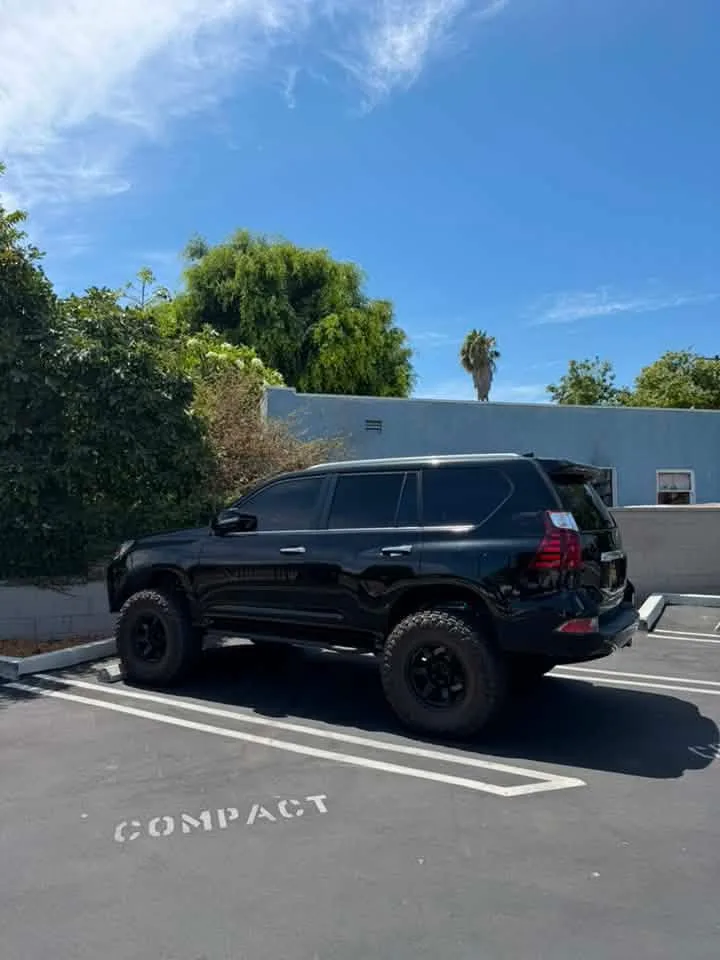
GX460 pictured. Photo supplied by Bo for this article. The pictured truck's full parts list and clearance through travel have not been verified.